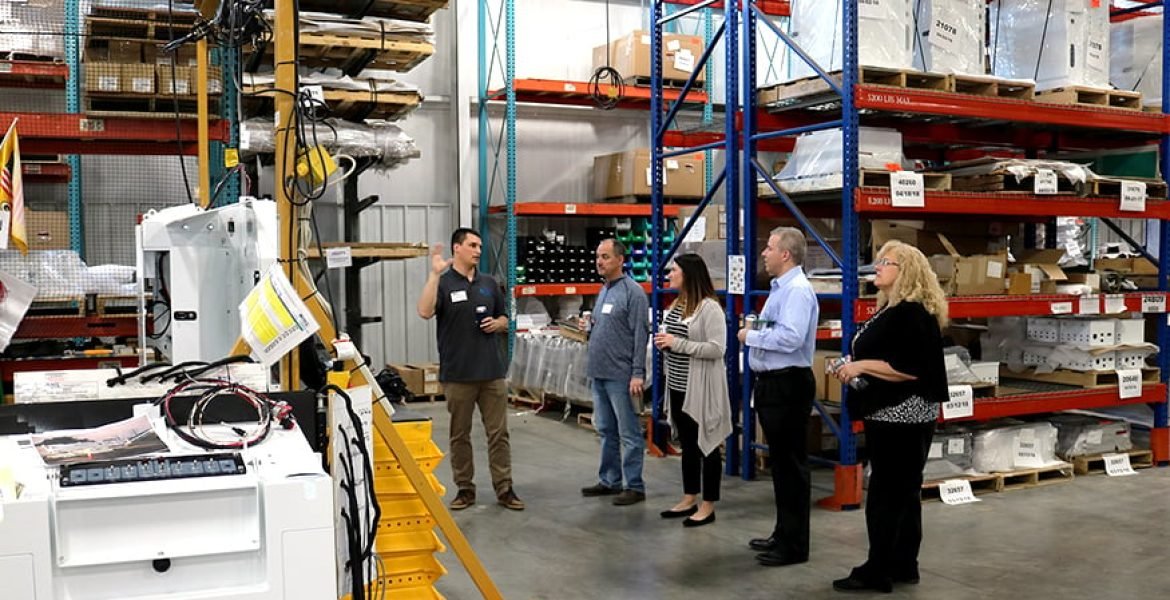
Why Visiting Your Supplier’s Factory Is a Game-Changer
How Factory Visits Reduce Import Risk by Over 50%
In international sourcing, what you don’t see can hurt you. Many importers rely on photos, video calls, and polished presentations when selecting suppliers—only to discover later that reality doesn’t match expectations. Delayed shipments, poor quality, and miscommunication often trace back to one root cause: lack of on-ground verification.
Factory visits are one of the most powerful yet underutilized tools in import risk management. When done correctly, they can reduce sourcing risks by over 50%—not by luck, but by replacing assumptions with real-world validation.
Here’s how factory visits transform your sourcing decisions from uncertain to informed.
1. You Verify the Supplier’s Existence and Authenticity
One of the biggest risks in global trade is dealing with suppliers who aren’t what they claim to be.
A factory visit confirms:
- The business physically exists
- The address is legitimate
- The operation is active and functional
Why it matters:
It eliminates the risk of fake companies, virtual offices, or trading firms posing as manufacturers.
2. You Distinguish Between Factory and Trader
Online profiles often blur the line between manufacturers and intermediaries.
During a factory visit, you can:
- Observe production lines
- Evaluate machinery and equipment
- Interact with production staff
Outcome:
You gain clarity on whether you’re dealing directly with a factory or a middleman.
3. You Assess Real Production Capacity
Suppliers may claim high production capabilities—but actual output often differs.
On-site evaluation helps you:
- Compare claimed vs. actual capacity
- Understand production bottlenecks
- Assess scalability for future orders
Why it matters:
This prevents overpromising and under-delivery on large orders.
4. You Evaluate Quality Control Systems
Quality is not just about the final product—it’s about the process behind it.
A factory visit allows you to:
- Review quality control checkpoints
- Observe testing procedures
- Inspect raw materials and storage conditions
Key insight:
Strong processes lead to consistent quality, while weak systems create unpredictable outcomes.
5. You Identify Hidden Red Flags Early
Many risks are invisible in emails but obvious on-site.
Watch for:
- Disorganized production floors
- Poor worker conditions
- Lack of standard operating procedures
- Inconsistent inventory management
Reality check:
These small signals often indicate larger operational issues.
6. You Build Stronger Supplier Relationships
Face-to-face interaction builds trust that emails cannot.
During visits, you can:
- Align expectations clearly
- Discuss customization in detail
- Establish direct communication channels
Result:
Stronger relationships lead to better cooperation and smoother transactions.
7. You Improve Negotiation Power
When you understand a supplier’s real capabilities, you negotiate from a position of strength.
You can:
- Set realistic pricing benchmarks
- Negotiate better payment terms
- Align timelines based on actual capacity
Why it matters:
Knowledge reduces dependency and improves deal outcomes.
8. You Reduce Quality Surprises
Seeing samples is one thing—seeing production is another.
Factory visits help you:
- Validate whether samples are made in-house
- Ensure consistency between sample and bulk production
- Identify risks of subcontracting
Impact:
Fewer surprises when the final shipment arrives.
9. You Enable Better Risk Planning
A factory visit provides insights that help you plan ahead.
You can:
- Identify alternate production lines
- Evaluate backup capabilities
- Understand supply chain dependencies
Outcome:
Better preparedness for delays, disruptions, or demand spikes.
10. You Make Confident Payment Decisions
Ultimately, most import risks revolve around one decision: when and how much to pay.
After a factory visit, you:
- Have verified operational credibility
- Understand production realities
- Trust the supplier based on evidence, not assumptions
Result:
You can release payments with far greater confidence.
When You Can’t Visit Personally
Not every importer can travel for factory visits—and that’s understandable.
In such cases, consider:
- Hiring third-party inspection agencies
- Working with local sourcing partners
- Requesting detailed audit reports with photos and videos
Important:
Remote verification is better than none—but on-ground validation remains the gold standard.
Common Mistakes to Avoid
- Skipping factory visits to save cost
- Relying only on virtual tours
- Ignoring small red flags during visits
- Not documenting observations
- Visiting without a structured checklist
Avoiding these mistakes ensures you get maximum value from your visit.
Final Thoughts
Factory visits are not an expense—they are an investment in risk reduction. In a global trade environment where uncertainties are common, physically verifying your supplier provides clarity that no document or online listing can match.
Reducing import risk by over 50% isn’t about complex strategies—it’s about making smarter, more informed decisions at the ground level.
Share:
newsletter
Subscribe To Our Newsletter
Be ready for the ever-changing world.
Get practical insights on cross-border expansion, market entry strategies, digital growth, and Southeast Asia business trends delivered straight to your inbox.
We help businesses expand confidently across India, Vietnam, and Southeast Asia through market entry consulting, growth marketing, and technology-driven execution.
Information
Contact Us
- 455–455A–457 Hoàng Sa, Phường Võ Thị Sáu, Quận 3,Thành phố Hồ Chí Minh, Việt Nam – 700000
- contact@indoviet.vn
- +84-876761740
- +84-562107246
© 2025 IndoViet Consultants & Commerce Co. Ltd. All rights reserved.