
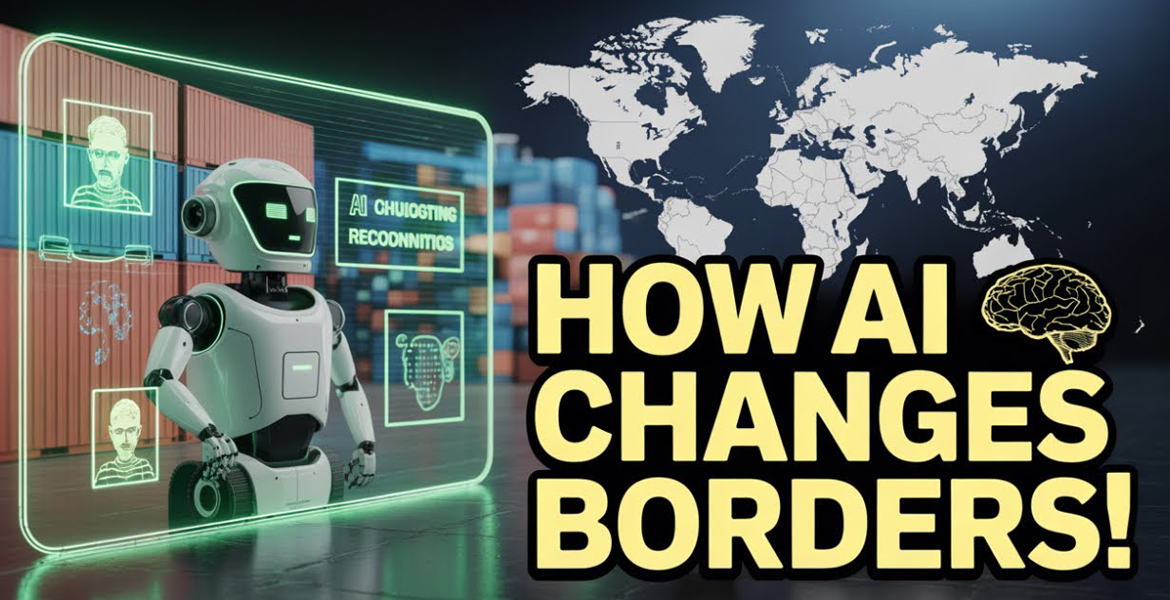
How AI and Automation Are Transforming Cross-Border Trade Operations
Cross-border trade has become increasingly complex as businesses expand into multiple markets, manage global supply chains, and navigate diverse regulatory environments. Traditional trade operations, which often rely on manual processes, fragmented systems, and paper-based documentation, struggle to keep pace with the speed and scale of modern international commerce. Artificial intelligence and automation are now playing a transformative role in reshaping cross-border trade operations by improving efficiency, reducing costs, enhancing compliance, and increasing visibility across the trade lifecycle.
One of the most significant impacts of AI and automation in cross-border trade is the digitization and automation of documentation. International trade involves extensive paperwork, including invoices, packing lists, certificates of origin, customs declarations, and compliance filings. Automated document processing systems powered by AI can extract, validate, and reconcile data across multiple documents with minimal human intervention. This reduces errors, accelerates customs clearance, and minimizes delays caused by incomplete or inaccurate information, which are common challenges in cross-border transactions.
Customs compliance and regulatory management have also been transformed through the application of AI-driven tools. Trade regulations vary widely across countries and are frequently updated, making compliance difficult to manage manually. AI systems can analyze large volumes of regulatory data, classify goods accurately, and flag potential compliance risks before shipments move across borders. By proactively identifying discrepancies in tariff classification, valuation, or origin requirements, automation helps businesses avoid penalties, shipment holds, and unexpected duties while maintaining smoother trade flows.
AI and automation are further enhancing supply chain visibility and decision-making in cross-border operations. Advanced analytics and machine learning models can process real-time data from logistics providers, ports, warehouses, and transportation networks to provide end-to-end visibility into shipment status. This allows businesses to predict delays, optimize routing, and respond quickly to disruptions caused by weather events, port congestion, or geopolitical developments. Improved visibility also enables more accurate demand forecasting and inventory planning across international markets.
In logistics and transportation management, automation is streamlining freight booking, carrier selection, and cost optimization. AI-powered platforms can compare rates across multiple carriers, assess transit times, and recommend the most efficient shipping options based on cost, speed, and reliability. Automated scheduling and tracking reduce manual coordination and improve service levels, particularly in complex multi-country shipments involving multiple handoffs and transport modes.
Financial operations within cross-border trade are also benefiting from AI-driven automation. Processes such as invoice reconciliation, duty calculation, tax compliance, and cross-border payments can be automated to improve accuracy and reduce processing time. AI systems can detect anomalies in pricing, freight charges, or duty assessments, helping finance teams control costs and reduce leakage. Faster and more transparent financial workflows also improve cash flow management and strengthen relationships with suppliers and logistics partners.
Risk management is another area where AI and automation are creating meaningful impact. Predictive analytics can assess risk factors related to suppliers, routes, geopolitical conditions, and regulatory changes, enabling businesses to anticipate disruptions and develop contingency plans. Automated alerts and scenario modeling support proactive decision-making, helping organizations maintain continuity in volatile global trade environments.
Despite these advantages, successful adoption of AI and automation in cross-border trade requires thoughtful implementation. Data quality, system integration, cybersecurity, and change management are critical considerations. Companies must ensure that automated systems are aligned with business processes and supported by skilled teams who can interpret insights and make informed decisions. Collaboration with technology providers and logistics partners is often essential to fully realize the benefits of digital transformation.
In conclusion, AI and automation are fundamentally reshaping how cross-border trade operations are managed, moving the industry toward greater efficiency, transparency, and resilience. By reducing manual effort, enhancing compliance, and enabling data-driven decision-making, these technologies empower businesses to scale international operations with confidence. As global trade continues to evolve, organizations that embrace AI and automation will be better positioned to navigate complexity and gain a competitive advantage in the cross-border marketplace.
Share:
newsletter
Subscribe To Our Newsletter
Be ready for the ever-changing world.
Get practical insights on cross-border expansion, market entry strategies, digital growth, and Southeast Asia business trends delivered straight to your inbox.

We help businesses expand confidently across India, Vietnam, and Southeast Asia through market entry consulting, growth marketing, and technology-driven execution.
Information
Contact Us
- 455–455A–457 Hoàng Sa, Phường Võ Thị Sáu, Quận 3,Thành phố Hồ Chí Minh, Việt Nam – 700000
- contact@indoviet.vn
- +84-921025002
© 2025 IndoViet Consultants & Commerce Co. Ltd. All rights reserved.