Think You’re Covered? The Incoterm Traps in Global Trade
The most expensive trade disputes don’t start in court—they start in a single misunderstood line of a contract.
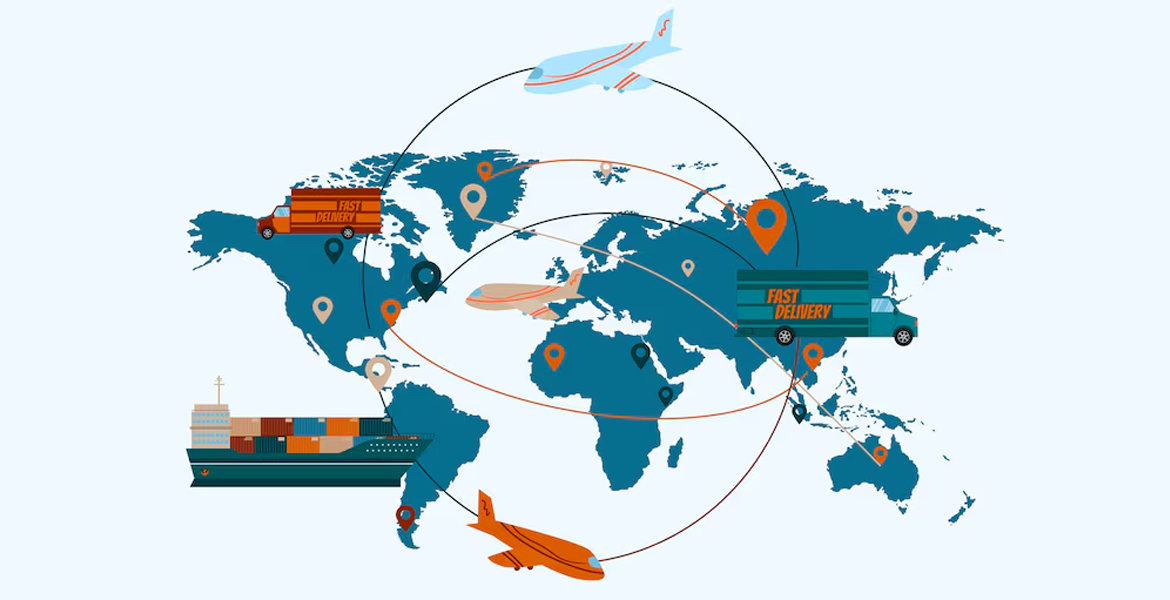
Every year, millions of dollars are lost in international trade due to shipment delays, damaged goods, unexpected costs, and legal disputes. Surprisingly, many of these conflicts trace back to one deceptively simple issue: incorrect or poorly understood Incoterms.
Incoterms (International Commercial Terms) are meant to reduce confusion in global trade. Yet when misapplied, outdated, or loosely defined, they do the opposite—creating gaps in responsibility, cost allocation, and risk transfer. For importers, exporters, and sourcing professionals, mastering Incoterms is not optional; it is a frontline risk management tool.
Below are the most common Incoterm mistakes that cause shipment disputes—and how to avoid them.
1. Using the Wrong Incoterm for the Mode of Transport
One of the most frequent and costly errors is selecting an Incoterm that does not match the transport mode.
For example, FOB (Free On Board) is often used for containerized shipments, even though it is designed for non-containerized sea freight. When containers are involved, the seller typically hands over the goods at a terminal—not “on board” the vessel—creating ambiguity around when risk actually transfers.
The result:
Disputes over cargo damage
Conflicting insurance claims
Arguments about who bore the risk at the terminal
Best practice:
Use FCA (Free Carrier) instead of FOB for containerized cargo. FCA clearly defines delivery at a named place and aligns better with modern logistics.
2. Failing to Specify the Incoterm Version
Incoterms are updated every ten years, yet many contracts simply state “FOB Shanghai” or “CIF Hamburg” without referencing the applicable edition.
This is a major risk because definitions and obligations do change between versions.
The result:
Parties relying on different interpretations
Legal uncertainty during disputes
Courts or arbitrators forced to interpret intent
Best practice:
Always specify the full term, including the version:
“CIF Hamburg – Incoterms® 2020”
This single line can prevent months of argument.
3. Assuming Incoterms Cover Everything
Incoterms define delivery, risk transfer, and cost allocation—but they do not govern payment terms, title transfer, quality standards, or remedies for breach.
Many businesses mistakenly believe that Incoterms replace a detailed sales contract.
The result:
Gaps in liability when goods are defective
Confusion over who owns the goods at different stages
Weak legal footing in disputes
Best practice:
Treat Incoterms as one component of a comprehensive contract. Clearly define:
When title transfers
Payment conditions
Inspection and quality requirements
Dispute resolution mechanisms
4. Misunderstanding Where Risk Actually Transfers
Another common mistake is confusing cost responsibility with risk responsibility. The two are not always aligned.
For example, under CIF, the seller pays for freight and insurance to the destination port—but risk transfers at the port of shipment, not arrival.
The result:
Buyers assuming they are protected until delivery
Sellers exposed to claims beyond their responsibility
Insurance disputes when damage occurs mid-voyage
Best practice:
Train commercial and logistics teams to distinguish clearly between who pays and who bears risk, Incoterm by Incoterm.
5. Using EXW Without Understanding the Importer’s Burden
EXW (Ex Works) is attractive on paper because it places maximum responsibility on the buyer. However, many buyers underestimate the operational and regulatory burden it creates.
Under EXW, the buyer is responsible for:
Export clearance
Loading
Local compliance in the seller’s country
In many jurisdictions, foreign buyers cannot legally perform export clearance.
The result:
Customs delays
Non-compliance penalties
Sellers informally performing tasks they are not contractually responsible for
Best practice:
In cross-border trade, FCA is usually safer and more practical than EXW, especially when buyers lack a legal presence in the export country.
6. Not Aligning Incoterms with Insurance Coverage
Incoterms define who must insure, but not how well the goods are insured.
For instance, CIF requires the seller to provide insurance, but only at minimum coverage, which may be inadequate for high-value or fragile goods.
The result:
Buyers discovering coverage gaps after a loss
Sellers accused of insufficient protection
Prolonged insurance claims
Best practice:
Explicitly define insurance requirements in the contract:
Coverage level (Institute Cargo Clauses A, B, or C)
Insured value
Named beneficiaries
7. Treating Incoterms as Boilerplate
Perhaps the most dangerous mistake is treating Incoterms as standard text copied from past contracts without strategic consideration.
Each transaction differs in:
Risk tolerance
Logistics capability
Regulatory environment
Negotiation leverage
The result:
Misaligned incentives
Hidden costs
Recurring disputes across shipments
Best practice:
Select Incoterms transaction by transaction, aligned with your supply chain strategy, not habit.
Turning Incoterms into a Competitive Advantage
When used correctly, Incoterms reduce friction, improve cost control, and strengthen commercial relationships. When misunderstood, they become silent triggers for disputes that erode margins and trust.
The most successful international traders treat Incoterms not as legal jargon, but as strategic tools—integrated into pricing, risk management, logistics planning, and contract design.
In global trade, clarity is not a courtesy. It is a competitive advantage.
Share:
newsletter
Subscribe To Our Newsletter
Be ready for the ever-changing world.
Get practical insights on cross-border expansion, market entry strategies, digital growth, and Southeast Asia business trends delivered straight to your inbox.
We help businesses expand confidently across India, Vietnam, and Southeast Asia through market entry consulting, growth marketing, and technology-driven execution.
Information
Contact Us
- 455–455A–457 Hoàng Sa, Phường Võ Thị Sáu, Quận 3,Thành phố Hồ Chí Minh, Việt Nam – 700000
- contact@indoviet.vn
- +84-562107246
© 2025 IndoViet Consultants & Commerce Co. Ltd. All rights reserved.