
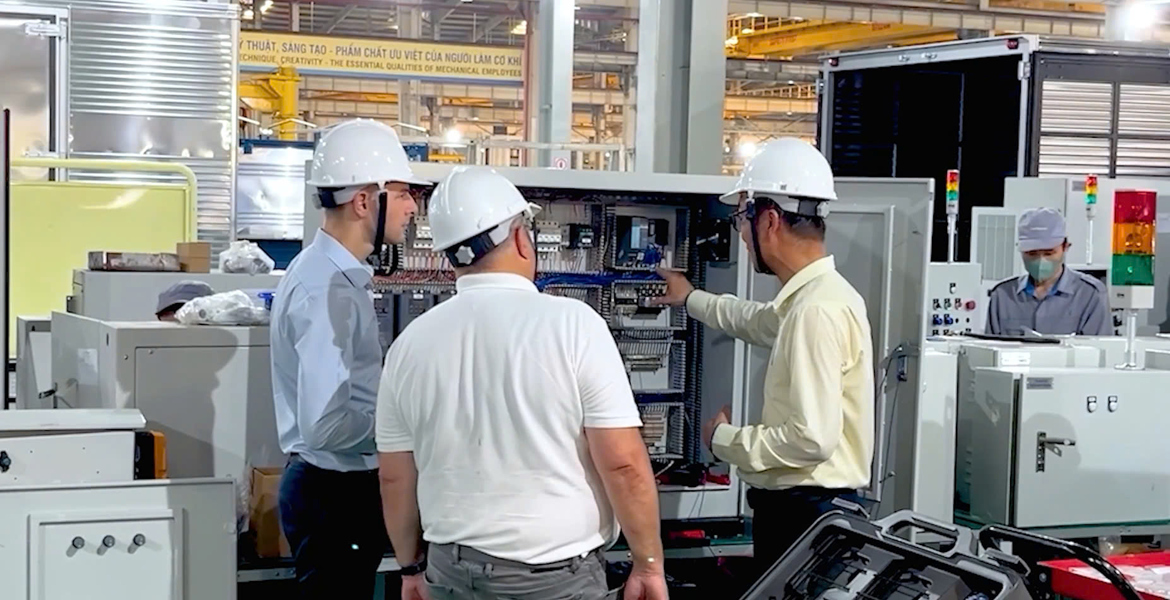
Why Vietnam Factories Overpromise—and How Buyers Can Protect Themselves
Production Capacity vs Reality: The Vietnam Factory Gap
Vietnam has become one of the most talked-about manufacturing destinations in the world. As global companies diversify away from over-reliance on China, Vietnam is often positioned as the natural alternative: competitive costs, political stability, strong trade agreements, and a rapidly growing industrial base. On paper, everything looks perfect.
Yet many importers discover a hard truth only after placing their first large order: declared production capacity and actual production capability are not the same thing. This disconnect—what many sourcing professionals quietly call the Vietnam factory gap—has real consequences for timelines, quality, and commercial risk.
The Promise vs. the Experience
Factory profiles often paint a compelling picture. Monthly output numbers are impressive. Equipment lists seem extensive. Lead times appear reasonable. Buyers, eager to secure capacity, move quickly.
Then reality sets in.
Orders slip. Quality fluctuates. Communication becomes vague. Production that was promised in four weeks stretches into eight or ten. For buyers accustomed to more mature manufacturing ecosystems, the gap between expectation and execution can be jarring.
This is not a criticism of Vietnam as a manufacturing destination. Rather, it reflects structural realities that are still evolving.
Why the Capacity Gap Exists
1. Capacity Is Often “Theoretical”
Many Vietnamese factories calculate capacity based on maximum potential output, not sustained output. This assumes:
Full staffing at all times
No machine downtime
No material delays
No overlapping orders
In practice, factories frequently juggle multiple buyers, rely on temporary labor, and operate with limited buffers. The result is optimistic capacity figures that collapse under real-world pressure.
2. Subcontracting Is Common—but Rarely Disclosed
A factory may quote capacity for 100,000 units per month while owning equipment for only half that volume. The balance is fulfilled through subcontractors. While subcontracting is not inherently bad, it introduces risks:
Inconsistent quality standards
Limited visibility for the buyer
Weak control over timelines
Many buyers believe they are working with a single factory when, in reality, production is fragmented across multiple workshops.
3. Labor Constraints Are More Severe Than Advertised
Vietnam’s manufacturing boom has created intense competition for skilled labor, especially in industrial hubs such as Ho Chi Minh City, Binh Duong, and Bac Ninh. Worker turnover is high, particularly after Tet (Lunar New Year).
A factory’s capacity may exist on paper, but without stable, trained labor, that capacity cannot be reliably delivered.
4. Equipment Does Not Equal Capability
Seeing machines on a factory floor can create false confidence. What matters is:
Operator skill
Maintenance discipline
Process control
Quality management systems
In many factories, equipment utilization is inconsistent, and preventive maintenance is weak. Machines exist, but output efficiency is far below global benchmarks.
The Hidden Risks for Importers
The Vietnam factory gap creates several downstream risks that often surface too late:
Delayed market entry due to missed production timelines
Quality disputes caused by rushed production to recover lost time
Cash flow strain when deposits are locked into stalled orders
Reputational damage when customers experience inconsistent supply
These risks are amplified for companies placing large initial orders without phased validation.
Why First Orders Are the Most Dangerous
Factories frequently over-promise on first orders to win the business. Commercial pressure, optimism, and fear of losing the deal all play a role.
Once production begins, reality intervenes:
Actual line speed is slower
Bottlenecks appear
Subcontractors are engaged without buyer approval
By the time the buyer realizes what is happening, the order is already in progress—and leverage is limited.
How Experienced Buyers Bridge the Gap
Seasoned importers do not rely on stated capacity alone. They apply a layered approach to validation.
1. Validate Sustained Output, Not Peak Output
Ask what the factory can produce every month, for six consecutive months, without overtime or subcontracting. This number is usually far lower—and far more reliable.
2. Start Below Quoted Capacity
Initial orders should rarely exceed 30–50% of claimed capacity. This allows both sides to test systems, communication, and execution under manageable pressure.
3. Inspect Production Planning, Not Just Facilities
A modern factory with poor production planning will still fail. Reviewing line balancing, shift structures, and order scheduling often reveals more than a factory tour.
4. Contractually Control Subcontracting
Contracts should clearly define whether subcontracting is permitted, under what conditions, and with what level of buyer visibility.
5. Build Time Buffers Into Market Commitments
Even with strong suppliers, Vietnam requires more buffer than mature manufacturing markets. Conservative timelines protect downstream operations.
Vietnam Is Still a Strong Manufacturing Choice—With Eyes Open
Vietnam’s manufacturing sector is improving rapidly. Many factories are investing in better systems, training, and compliance as they integrate into global supply chains. For buyers willing to invest time in due diligence and relationship building, Vietnam can deliver excellent long-term value.
But success depends on realism.
Understanding the difference between advertised capacity and operational reality is not pessimism—it is professional risk management. Companies that bridge this gap early gain a significant competitive advantage: fewer surprises, more predictable supply, and stronger supplier partnerships.
In global sourcing, optimism wins deals. Accuracy protects businesses.
Share:
newsletter
Subscribe To Our Newsletter
Be ready for the ever-changing world.
Get practical insights on cross-border expansion, market entry strategies, digital growth, and Southeast Asia business trends delivered straight to your inbox.
We help businesses expand confidently across India, Vietnam, and Southeast Asia through market entry consulting, growth marketing, and technology-driven execution.
Information
Contact Us
- 455–455A–457 Hoàng Sa, Phường Võ Thị Sáu, Quận 3,Thành phố Hồ Chí Minh, Việt Nam – 700000
- contact@indoviet.vn
- +84-562107246
© 2025 IndoViet Consultants & Commerce Co. Ltd. All rights reserved.